

 Tiếng Việt
Filler masterbatch is widely used in the plastics industry because it can partially replace virgin resin, optimize production costs, and help improve certain product properties. However, when it comes to food packaging, an important question is: Can filler masterbatch be safely used for products that come into contact with food?
The answer is yes, in some cases, but not every type of filler masterbatch is suitable for food applications. Its suitability depends on the raw materials, polymer base, additives, and, most importantly, whether the product meets the relevant safety requirements for its intended application.
What Is Filler Masterbatch?
Filler masterbatch, also known as plastic filler, is a material made from calcium carbonate (CaCO3), a polymer base, and specialized additives. Filler is typically blended with virgin resin to reduce the amount of polymer required, thereby helping control raw material costs.
In addition to its economic benefits, CaCO3 can help improve certain product properties, such as stiffness, dimensional stability, and processability. Depending on the polymer base and formulation, filler masterbatch can be used in the production of plastic films, packaging, containers, bottles, trays, and many other products.
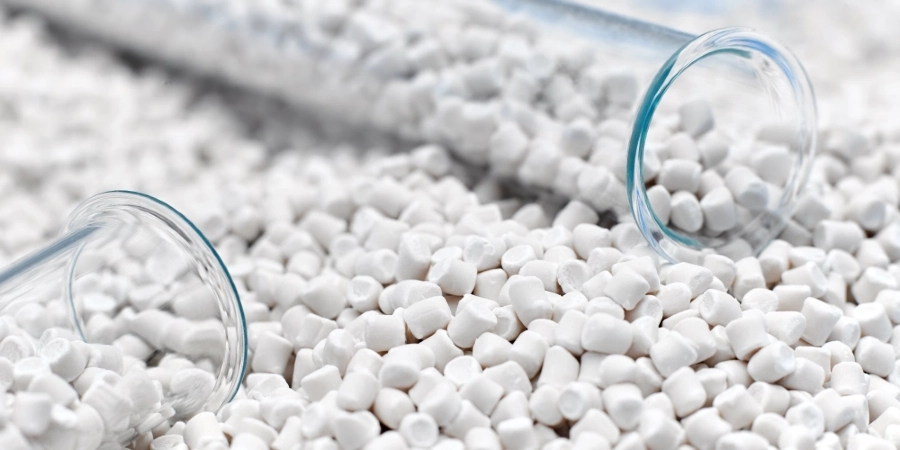
Is Filler Masterbatch Suitable for Food-Contact Products?
The suitability of filler for food applications cannot be determined simply by whether it contains CaCO3. For use in food packaging or products that come into direct contact with food, all components of the filler masterbatch must meet the appropriate safety requirements for the intended application.
This includes:
- CaCO3: The raw material source and purity must be suitable for the intended application.
- Polymer base: The polymer must be suitable for food-contact applications according to the applicable requirements.
- Additives: Additives should be selected from materials suitable for food-contact products and must not adversely affect the quality, taste, or safety of food.
- Manufacturing process: Production processes should be properly controlled to minimize the risk of contamination during compounding and pelletizing.
Therefore, standard filler masterbatch for general plastic applications should not automatically be considered suitable for food-contact applications. Manufacturers should carefully review the technical specifications and relevant certifications of each material before using it in production.
How Is Filler Masterbatch Used in Food Packaging?
In the packaging industry, filler masterbatch can be used in certain products such as plastic films, bags, containers, trays, and other types of packaging, depending on the polymer base and processing technology.
When the appropriate filler is used at a suitable blending ratio, it can help:
- Reduce the amount of virgin resin required.
- Optimize production costs.
- Improve product stiffness and dimensional stability.
- Support better control of thickness and dimensions during processing.
- Facilitate certain film and packaging manufacturing processes.
However, the filler content must be carefully determined according to the specific requirements of the product. If an unsuitable filler is used or the loading level is too high, it may affect transparency, strength, sealing performance, mechanical properties, or other characteristics of the packaging.

Factors to Consider When Choosing Filler for Food Applications
For products that come into direct contact with food, filler selection requires greater care than for conventional plastic products.
First, manufacturers should check the source and purity of the CaCO3, as well as clearly identify the polymer base used. The composition of the entire additive system should also be reviewed to ensure that it is appropriate for food-contact applications.
Technical documents and supporting compliance documentation are also important when evaluating whether the material is suitable for food-contact use. Depending on the target market and intended application, the product may need to comply with specific regulations or safety standards.
In addition to the raw materials, storage, blending, and processing conditions should also be properly controlled to minimize the risk of contamination during production.
Should Filler Masterbatch Be Used for Food Packaging?
Filler masterbatch can be used in the production of certain food packaging and plastic products that come into contact with food, provided that the material is specifically formulated with suitable raw materials and additives and meets the applicable food-contact safety requirements.
Standard filler masterbatch should not be used for food-contact products simply because its main component is CaCO3. What matters is the complete formulation, including the polymer base, CaCO3, and additives, as well as the relevant technical documentation and safety requirements.
For food packaging manufacturers, choosing the right filler can help optimize production costs while ensuring that the final product meets the required quality and safety standards.
Conclusion
Filler masterbatch can be used in food packaging applications when it is manufactured with suitable raw materials and additives and meets the relevant safety requirements for food-contact materials. However, not all filler masterbatch products available on the market are suitable for this purpose.
Before incorporating filler masterbatch into a production formulation, manufacturers should clearly identify the intended application, type of food contact, processing conditions, and requirements of the target market. Checking the raw material source, additive composition, technical specifications, and relevant compliance documentation will help manufacturers select a suitable filler while optimizing costs and maintaining product quality and safety.